
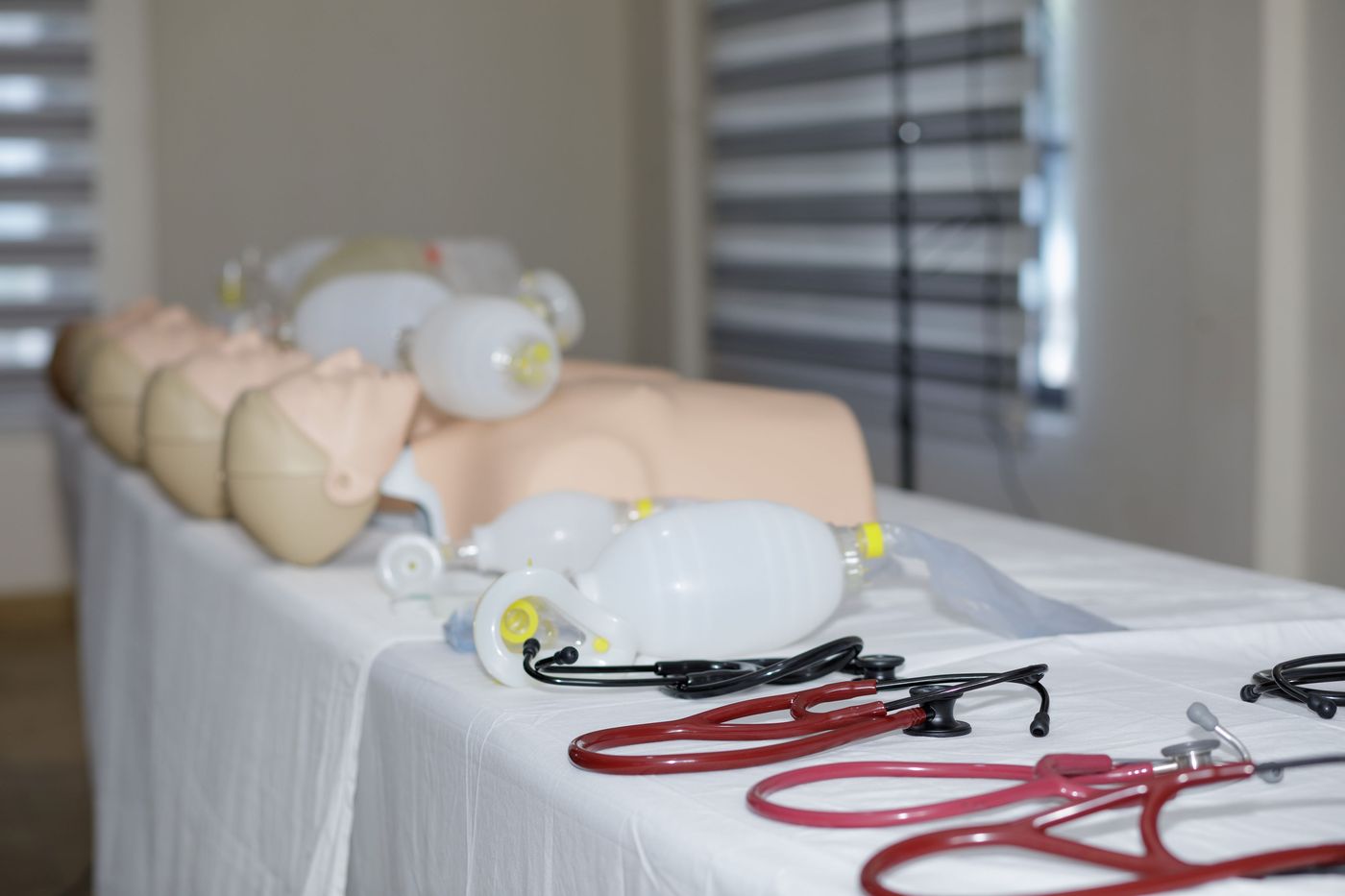
The Emergency Corner Model
Bringing life-saving emergency care closer to every patient.
Every minute matters in an emergency
Yet across many healthcare facilities, patients with life-threatening conditions may experience delays in recognition, assessment, stabilisation and referral.
The Emergency Corner Model (ECM) is a practical, scalable initiative developed by the Charles Amissah Emergency Care Foundation Ghana (CAECFgh) to strengthen the early identification and initial management of critically ill and injured patients.
It helps healthcare facilities recognise emergencies promptly, prioritise patients, start appropriate life-saving interventions and arrange timely escalation or referral.
We believe that saving lives should not depend on how far a patient must travel or how long they must wait.
- WHO Basic Emergency Care approach
- Systematic ABCDE assessment
- Established triage principles such as the South African Triage Scale (SATS)
- Local protocols aligned with national guidance and each facility's scope of practice and resources
A structured approach to the first point of emergency care
Designed for adaptation across different levels of healthcare delivery, including district hospitals, polyclinics, health centres and other appropriate facilities. The model provides a framework for:
Early recognition
Early recognition of life-threatening conditions.
Rapid triage
Rapid triage and prioritisation according to clinical urgency.
Systematic assessment
Systematic assessment using Airway, Breathing, Circulation, Disability and Exposure (ABCDE).
Immediate stabilisation
Immediate stabilisation and essential emergency interventions within the facility's capacity.
Safe referral
Appropriate referral, escalation and communication with receiving facilities.
Team coordination
Improved coordination among healthcare workers.
Our commitment: no critically ill patient should be left unidentified, unattended or unnecessarily delayed.
Five steps, from the door to the right care
Follow a patient through an Emergency Corner. Press any step to jump to it.
Recognise
Identify danger signs and potentially life-threatening conditions promptly. No critically ill patient should be left unidentified, unattended or unnecessarily delayed.
Triage
Prioritise patients using a structured assessment of clinical urgency. Guided by established triage principles such as the South African Triage Scale (SATS).
Assess
Conduct a systematic ABCDE assessment: Airway, Breathing, Circulation, Disability and Exposure. Drawing on recognised approaches such as WHO Basic Emergency Care.
Stabilise
Initiate appropriate life-saving interventions using available equipment, protocols and trained personnel. Always within the facility's scope of practice and resources.
Refer or continue care
Determine the appropriate disposition, arrange timely escalation or referral when needed, and support continuity of care. With clear communication to the receiving facility.
Where delays cost lives
In resource-constrained settings, emergency care can be affected by:
- Delayed recognition of critical illness
- Limited equipment and supplies
- Inconsistent triage processes
- Gaps in staff preparedness
- Delays in stabilisation before referral
- Fragmented referral pathways
A standardised, adaptable and resource-conscious approach that strengthens the first point of emergency care.
Inside an Emergency Corner
Each participating facility is supported to set up an appropriately equipped and staffed emergency care point. Tap an item to see where it fits.
Tap a number or an item in the list.
Everyone has a part to play
Hospitals and health facilities
Adopt and establish an Emergency Corner.
Adopt a cornerDoctors, nurses and physician assistants
Take part in training, implementation and clinical improvement.
Get involvedCorporate organisations
Sponsor equipment, facility set-up or training through CSR support.
Become a sponsorNGOs and development partners
Support implementation, expansion and sustainability.
Partner with usGovernment and health authorities
Facilitate alignment, coordination and scale-up.
Work with usMedical professionals and volunteers
Contribute technical expertise, mentorship and training.
VolunteerIndividuals and philanthropists
Sponsor a facility, donate equipment or support training.
GiveOne Emergency Corner at a time
CAECFgh envisions a network of functional Emergency Corners across Ghana, beginning with selected pilot facilities in the Central Region and expanding through a phased implementation strategy.
- Equip healthcare facilities with essential emergency resources.
- Train healthcare professionals in early emergency recognition and initial stabilisation.
- Strengthen standardised emergency assessment and triage.
- Improve referral pathways and communication between facilities.
- Monitor implementation, quality of care and patient outcomes.
- Use lessons from pilot sites to guide responsible expansion to other regions.
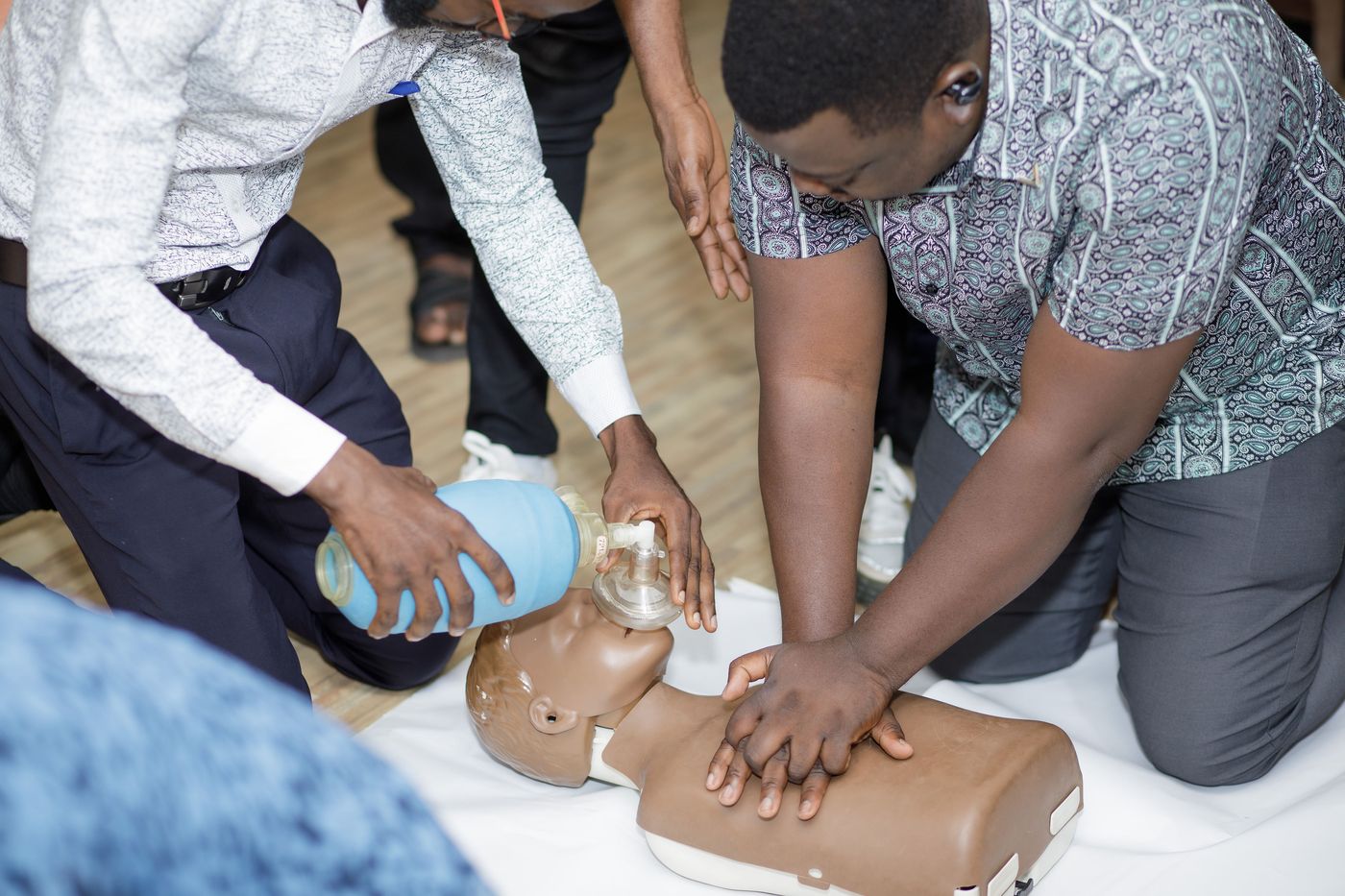
This initiative needs more than funding
It needs people, partnerships, commitment and collective action. There are several ways to contribute:
Sponsor an Emergency Corner
Help equip a healthcare facility with essential emergency equipment and supplies.
Sponsor a corner 02Sponsor healthcare training
Support practical training for doctors, nurses, physician assistants and first responders.
Sponsor training 03Donate equipment and supplies
Contribute monitors, resuscitation equipment, consumables and other essential resources.
Offer equipment 04Become an implementation partner
Collaborate with CAECFgh to establish, evaluate and expand the model.
Partner with usPartner with us. Sponsor a facility. Equip a corner. Save a life.
Every hospital deserves the capacity to recognise an emergency.
Every healthcare worker deserves the tools and training to respond.
Every patient deserves the opportunity to receive timely, appropriate care.