
Be Ready. Two minutes here could save a life.
Practise hands-only CPR with our interactive trainer, save Ghana's emergency numbers and learn what to do before help arrives.
Check. Call. Compress.
Check
Make sure the scene is safe. Tap their shoulders and shout. If they don't respond and aren't breathing normally, act now.
Call
Call 112 or the National Ambulance Service on 193, or tell someone to. Put the phone on speaker and give your exact location.
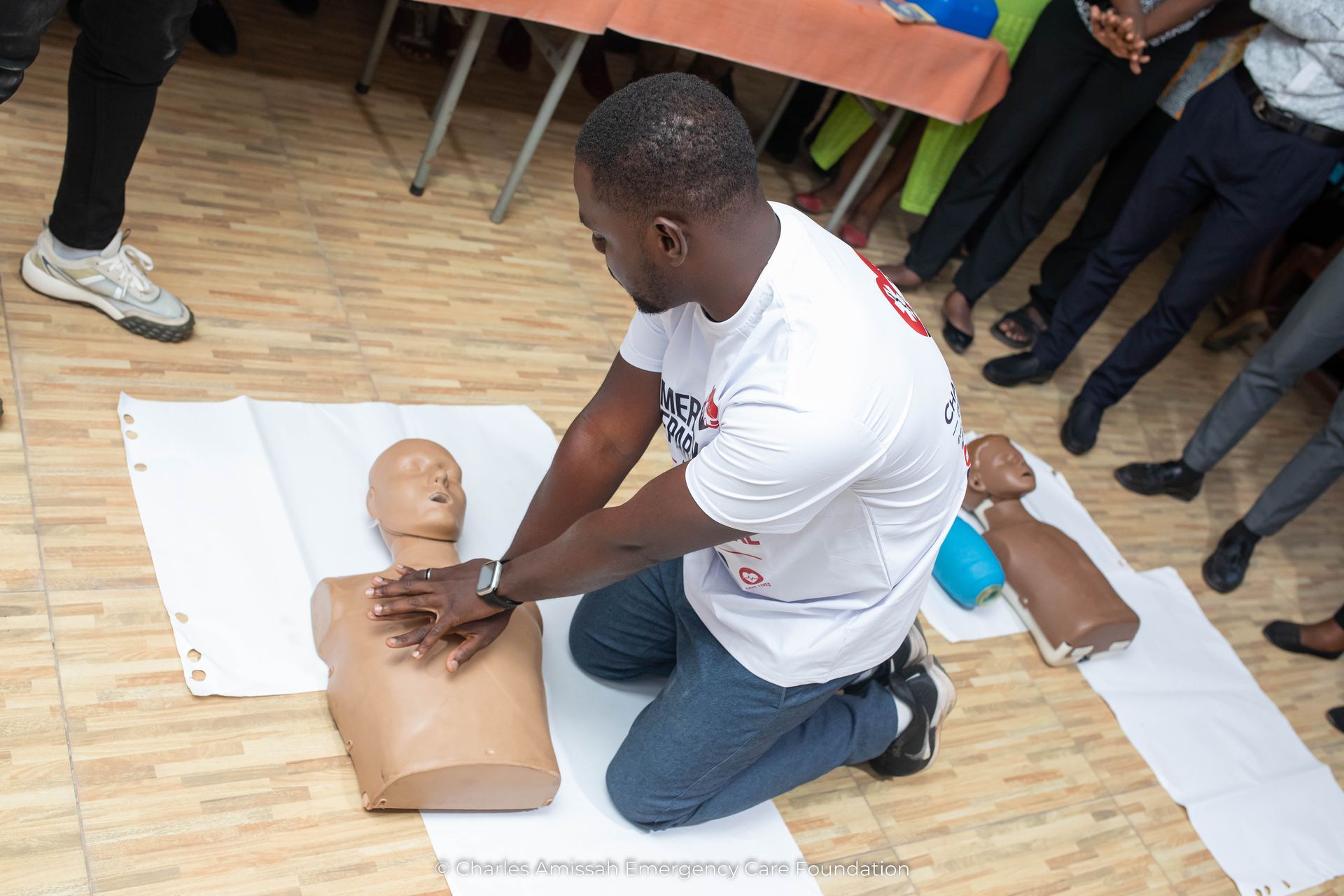
Compress
Heel of your hand in the centre of the chest, other hand on top. Push hard and fast, 5–6 cm deep, 100–120 times a minute. Don't stop until help arrives.
Find the beat that keeps blood flowing
Real compressions need to be 100 to 120 per minute. That's faster than most people expect. Tap the heart in rhythm (or press the space bar) and watch the gauge.
- Turn on the beat. We'll play a 110 bpm click. Songs with a similar tempo can help you remember it.
- Let the chest rise fully between compressions. Don't lean on it.
- Swap every two minutes if someone else can take over. Good CPR is exhausting.
Ghana emergency numbers
Tap to call. Save them all to your phone in one go.
What to do while you wait for help
Road traffic crash
- Protect yourself first: park safely, switch on hazard lights and watch for traffic.
- Call 112 / 193 and give the exact location and number of people hurt.
- Don't move an injured person unless they are in immediate danger (fire, oncoming traffic).
- If someone isn't breathing normally, start CPR. Press firmly on severe bleeding.
Severe bleeding
- Press firmly and directly on the wound with a clean cloth, or your hand if nothing else is available.
- Keep pressing. Don't keep lifting to check. Add more cloth on top if blood soaks through.
- Keep the person warm and lying down until help arrives.
Choking adult
- Ask "Are you choking?" If they can cough, encourage them to keep coughing.
- If they can't cough, speak or breathe: give up to 5 firm back blows between the shoulder blades.
- Then give up to 5 abdominal thrusts. Repeat back blows and thrusts, and call for help.
- If they become unresponsive, call 112 / 193 and start CPR.
Unresponsive but breathing
- Call for help.
- Place them in the recovery position (on their side, head tilted back) to keep the airway open.
- Keep checking their breathing. If it stops or becomes abnormal, start CPR.
Burns
- Cool the burn under cool running water for at least 20 minutes.
- Remove jewellery and clothing near the burn, unless it is stuck to the skin.
- Cover loosely with cling film or a clean, non-fluffy cloth. Don't apply creams, butter or toothpaste.
- Seek medical help for large, deep, facial or electrical burns, and for burns on children.
General first-aid guidance for awareness only. Always follow the advice of the emergency call-taker, and get trained.